


There’s a certain kind of destination that rewards travelers who prefer freedom over schedules—the kind of place where the journey shapes the experience as much as the arrival. Gyumri fits that description perfectly. Set in Armenia’s Shirak Province, this city carries a distinct rhythm, shaped by centuries of craftsmanship, resilience, and a cultural identity that feels noticeably different from the capital.
The drive from Yerevan to Gyumri takes about 2 to 2.5 hours, covering roughly 120 km (75 miles). It’s not just a transfer between two points—it’s a gradual shift in landscape and atmosphere. As the road climbs through open highlands and quiet villages, Armenia reveals a more grounded, less polished side. Having your own car turns that transition into part of the story, letting you pause, take detours, and experience the country beyond the main highways.
Somewhere along that route, it becomes clear why Gyumri has earned its reputation as Armenia’s cultural second city—less crowded, more textured, and full of character that doesn’t try too hard to impress.
Wrapped naturally into that journey, choosing the right vehicle matters more than it might seem. For a trip like this, the team at Gurosun recommends going with an economy-class rental —practical, fuel-efficient, and perfectly suited for Armenia’s roads. It keeps the focus where it should be: on the experience itself, not on logistics or unnecessary costs.
5 Popular Things to See in Gyumri
Gyumri doesn’t overwhelm visitors with sheer volume of attractions—it draws you in with depth. The city’s highlights are connected by atmosphere, not just location, making each stop feel like part of a broader narrative rather than a checklist.
Kumayri Historic District
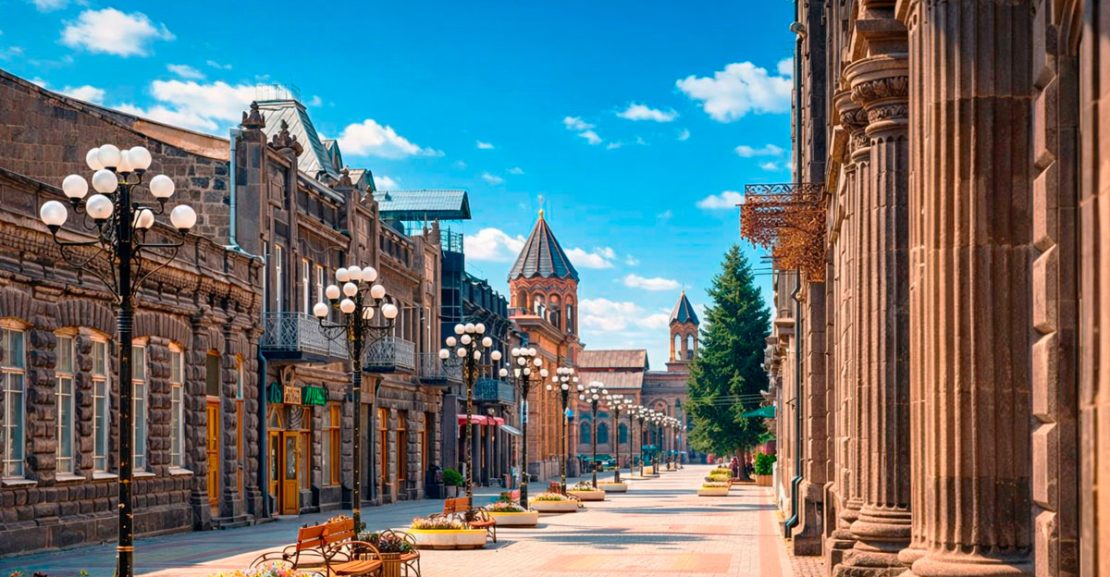
Walking through Kumayri feels like stepping into a preserved chapter of 19th-century Armenia. The district is known for its black tuff stone buildings, many of which have survived earthquakes and the passage of time. The architecture reflects a blend of Armenian traditions and subtle European influences, giving the streets a unique visual identity.
What stands out isn’t just the buildings, but the details—ornate balconies, carved doorways, and quiet courtyards that hint at everyday life from another era. Driving here gives you flexibility, but once inside the district, slowing down and exploring on foot reveals its true character.
Vardanants Square
At the heart of Gyumri lies Vardanants Square, a wide, open space that acts as both a landmark and a gathering point. It’s surrounded by significant buildings, including churches and cultural institutions, but what makes it memorable is its scale and simplicity.
In the evening, the square comes alive with locals, families, and travelers, creating a relaxed, authentic atmosphere. It’s the kind of place where you don’t need a plan—just time to observe and take in the rhythm of the city.
Church of the Holy Savior
Dominating the skyline with its striking silhouette, the Church of the Holy Savior is one of Gyumri’s most important landmarks. Built in the 19th century and carefully restored after earthquake damage, it represents both architectural ambition and resilience.
Inside, the space feels balanced—neither overly ornate nor minimal. The structure’s design draws attention upward, creating a sense of openness that contrasts with the solid exterior. Visiting here offers insight not just into religion, but into the city’s long history of rebuilding and preservation.
Museum of National Architecture and Urban Life
For those who want context beyond what’s visible on the streets, this museum provides a deeper understanding of Gyumri’s identity. Housed in a historic mansion, it showcases how people lived, worked, and shaped their environment over generations.
The exhibits go beyond artifacts—they tell stories of craftsmanship, social life, and the evolution of urban space in Armenia. It’s especially valuable for travelers interested in how culture defines a city over time.
Gyumri’s Black Fortress (Sev Berd)
Standing on the outskirts of Gyumri, the Black Fortress offers a completely different perspective—both visually and historically. Built during the Russian Empire, the circular structure once served as a military stronghold.
Today, it’s more about the view than defense. From this elevated point, the surrounding landscape opens up, giving you a clear sense of the region’s scale and geography. Reaching it by car is straightforward, and the short drive adds variety to your exploration of the city.
When to Visit Gyumri
Timing can significantly shape your experience in Gyumri. The city sits at a higher elevation than Yerevan, which means cooler temperatures and more pronounced seasonal changes.
Spring brings mild weather and fewer crowds, making it ideal for walking through historic districts and enjoying the city at a relaxed pace. Summer is warmer but still comfortable compared to many other destinations in the region, offering long days and vibrant street life.
Autumn stands out for its crisp air and softer light, which complements Gyumri’s stone architecture beautifully. Winter, on the other hand, transforms the city into a quieter, more atmospheric destination, often covered in snow—appealing to those who appreciate a slower, more introspective travel experience.
Where to Eat in Gyumri
Food in Gyumri reflects the city’s character—simple in presentation, rich in flavor, and rooted in tradition.
Cherkezi Dzor is known for its fresh fish and relaxed setting, offering a slightly different take on Armenian cuisine. The focus here is on high-quality ingredients and straightforward preparation, allowing the natural flavors to stand out.
For something more traditional, Poloz Mukuch provides a deeper dive into local dishes. The interior design adds to the experience, blending cultural elements with a warm, welcoming atmosphere. Meals here tend to be generous, making it a great stop after a full day of exploring.
There are also smaller, less formal spots scattered throughout the city—places where menus are shorter, but authenticity is high. Having a car makes it easier to discover these hidden options without being limited to central locations.
A Journey That Stays With You
Gyumri doesn’t try to compete with larger or more polished destinations—it offers something more grounded. Its strength lies in consistency: architecture, culture, and daily life all come together to create an experience that feels genuine from start to finish.
Traveling here by car enhances that experience, giving you full control over how deeply you engage with the city and its surroundings. Whether it’s stopping along the way, exploring beyond the center, or simply moving at your own pace, that flexibility adds real value.
Not long ago, we also explored another distinctive destination in Armenia. If you’re planning a broader trip, take a look at the article “Vacation in Tsaghkadzor”—it offers a completely different atmosphere, focused on mountain landscapes and year-round outdoor activities.
Gyumri, in contrast, leaves a quieter impression—one that builds gradually and stays with you long after the trip ends.